

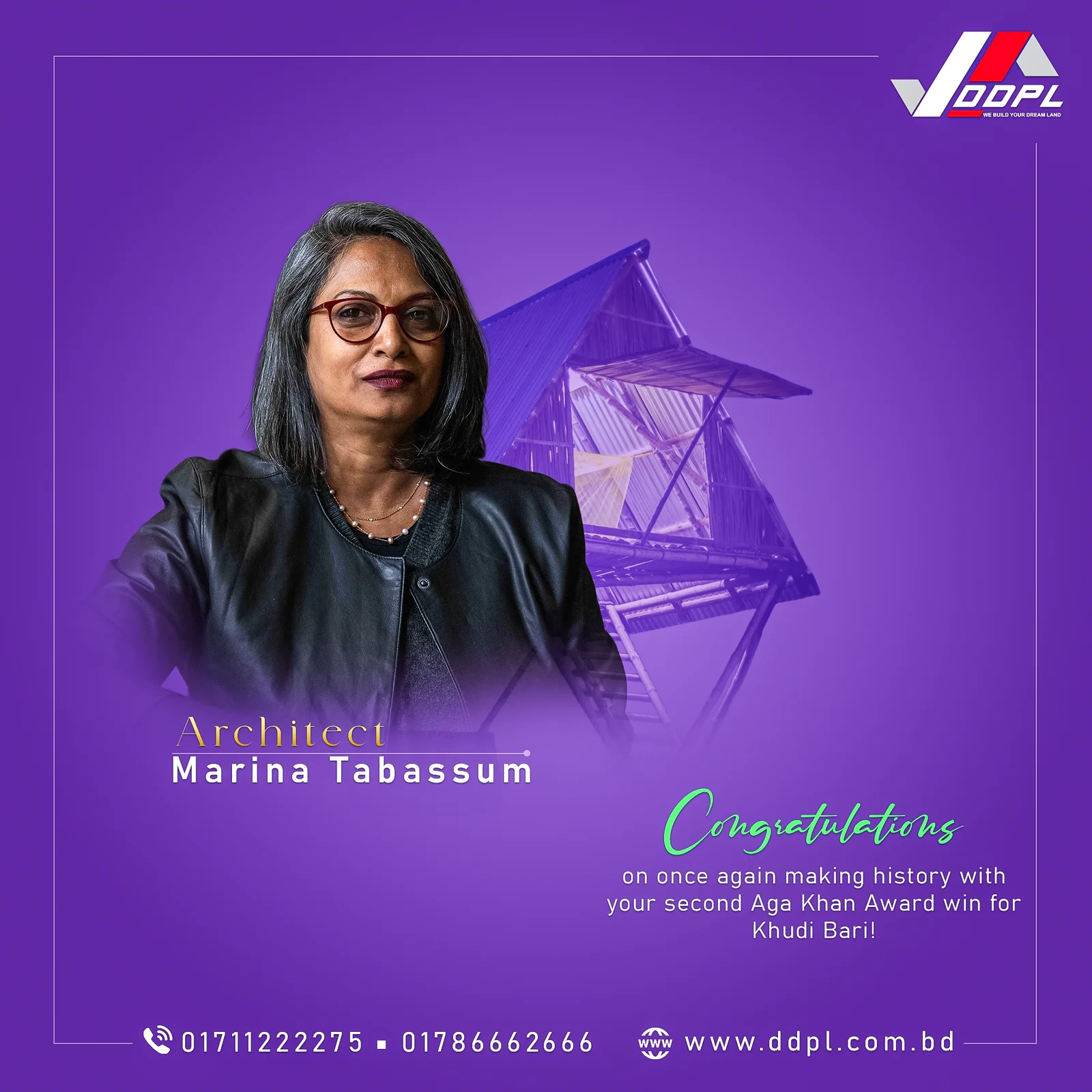
From award-winning mosques and memorials to innovative climate-resilient housing and internationally celebrated pavilions, Marina Tabassum Architects continues to demonstrate how architecture can positively influence communities while respecting history, culture, and the natural environment.
About Marina Tabassum Architects
Marina Tabassum Architects (MTA) was established in Dhaka after Marina Tabassum co-founded URBANA in 1995. Since its inception, the practice has remained intentionally selective, choosing only a limited number of projects each year to ensure exceptional quality, extensive research, and careful attention to every design detail.
The firm's design philosophy is built upon several core principles:
Context-sensitive architecture
Climate-responsive design
Sustainable construction
Social responsibility
Cultural preservation
Research-driven planning
Community engagement
Rather than applying universal architectural styles, MTA carefully studies the climate, geography, history, and traditions of each project location to create buildings that naturally belong to their surroundings.
Design Philosophy: Architecture with Purpose
One of the defining characteristics of Marina Tabassum Architects is its commitment to creating architecture that serves both people and the environment.
Every project begins with in-depth research into local conditions, community needs, environmental challenges, and cultural identity. This thoughtful process enables MTA to produce buildings that are not only visually striking but also environmentally responsible, energy-efficient, and socially meaningful.
The firm's work demonstrates that great architecture is measured not only by aesthetics but also by its long-term impact on people's lives.
Signature Projects
Bait Ur Rouf Mosque, Dhaka (2012)
Perhaps Marina Tabassum's most internationally recognized project, Bait Ur Rouf Mosque reimagines Islamic architecture through simplicity, natural light, and passive ventilation rather than traditional domes or minarets.
The mosque creates a peaceful spiritual environment using exposed brick, carefully positioned openings, and geometric forms that respond beautifully to Bangladesh's climate.
Its innovative design earned the prestigious Aga Khan Award for Architecture in 2016 and established Marina Tabassum as one of the world's leading contemporary architects.
Independence Monument & Liberation War Museum
Designed in collaboration with URBANA between 1997 and 2006, the Independence Monument and Liberation War Museum at Suhrawardy Udyan commemorates Bangladesh's struggle for independence through minimalist architecture integrated seamlessly with the surrounding landscape.
Rather than overwhelming visitors with monumental structures, the project uses space, symbolism, and thoughtful landscape design to create a powerful emotional experience.
Comfort Reverie
Completed in 2011 in Banani, Dhaka, Comfort Reverie demonstrates how contemporary residential architecture can successfully combine beauty with environmental performance.
The building features an elegant brick façade, effective solar shading, generous natural ventilation, and compliance with updated urban planning regulations, making it an excellent example of climate-responsive apartment design.
Khudi Bari (Small House)
One of Marina Tabassum Architects' most socially impactful projects, Khudi Bari was developed as an affordable housing solution for flood-prone communities across Bangladesh.
The lightweight modular homes are easily transportable, constructed using locally available materials, and specifically designed to adapt to changing environmental conditions.
Following its widespread success, the project received the Aga Khan Award for Architecture 2025, further demonstrating the global importance of humanitarian architecture.
Serpentine Pavilion 2025, London
Marina Tabassum's international influence reached another milestone with the design of the Serpentine Pavilion 2025 in London.
Inspired by traditional Bengali Shamiyana tents, the 55-meter pavilion surrounds an ancient ginkgo tree and combines bamboo, fabric, and kinetic structural elements to create flexible public spaces capable of accommodating approximately 200 visitors.
The project represents a remarkable fusion of Bengali cultural heritage and contemporary engineering while encouraging dialogue, gathering, and community engagement.
Commitment to Sustainability
Sustainability is central to every Marina Tabassum Architects project.
Rather than relying heavily on mechanical systems, the practice prioritizes natural ventilation, daylight optimization, passive cooling, locally sourced materials, and environmentally responsible construction techniques.
This approach reduces energy consumption while creating healthier and more comfortable spaces for occupants.
MTA's philosophy demonstrates that sustainable architecture can also be elegant, timeless, and deeply connected to local identity.
International Recognition
Marina Tabassum has received numerous international awards for her contribution to architecture.
Among her most significant recognitions are:
Aga Khan Award for Architecture (2016)
Aga Khan Award for Architecture (2025)
Soane Medal
French Academy of Architecture Gold Medal
Arnold Brunner Prize
Lisbon Lifetime Achievement Award
Named among TIME 100 Most Influential People (2024)
In addition to professional practice, she has taught architecture at several internationally respected institutions, including Delft University of Technology, Harvard Graduate School of Design, and the University of Toronto.
Lasting Influence on Contemporary Architecture
Marina Tabassum Architects has become a global example of how architecture can respond thoughtfully to environmental challenges while celebrating local culture and improving communities.
Whether designing sacred spaces, residential buildings, memorials, humanitarian housing, or public pavilions, the practice consistently demonstrates that meaningful architecture begins with understanding people, place, and purpose.
Its projects continue to inspire architects, developers, urban planners, and design professionals around the world, proving that architecture can be both beautiful and socially transformative.
As Bangladesh's architectural influence continues to grow internationally, Marina Tabassum Architects remains at the forefront of innovative, sustainable, and human-centered design, setting new standards for future generations.